
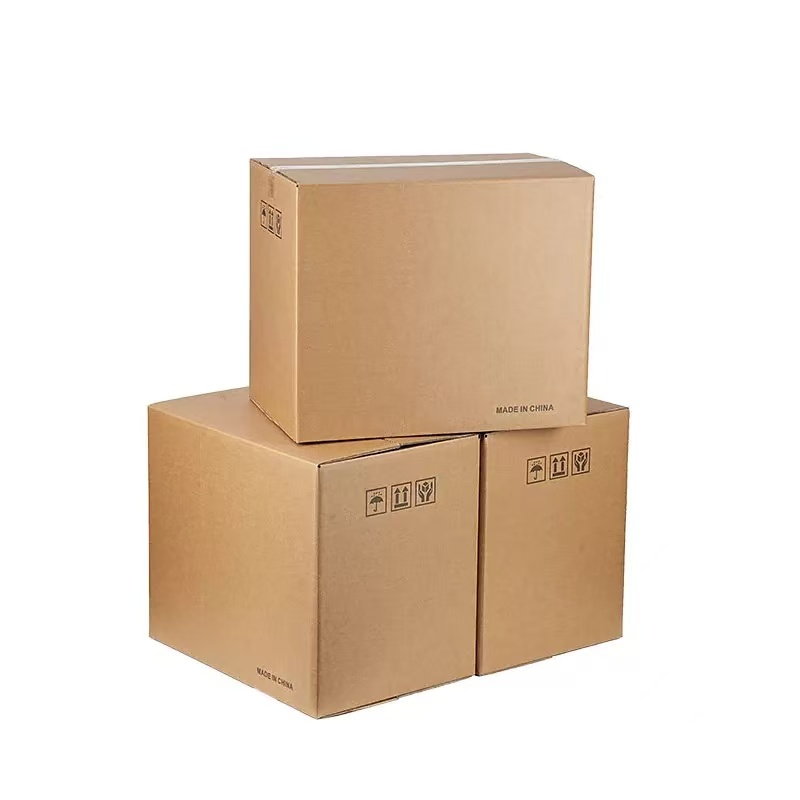
Concept (What it is)
A shipping box is a corrugated outer carton designed to get your products to customers safely and cost-effectively. It’s about compression strength, drop resistance, clean stacking, and predictable cost—not fancy looks.
The most common style is the regular slotted carton (RSC, FEFCO 0201): four flaps meet in the middle and you close it with tape or box staples. Many brands place their inner packaging (a printed carton or mailer box) inside the shipping box for transport.
In one line: If you want smooth shipping, tidy warehousing, and a friendly budget—use a shipping box.
Materials (What it’s made of)
Corrugated flutes
B flute (≈2.5–3.5 mm): all-rounder, good compression strength.
C flute (≈3.5–4.5 mm): better cushioning; common for larger cartons.
Double-wall (e.g., BC or EB): two flute layers stacked; higher stacking and puncture resistance for heavy loads, long routes, or high stacks.
Liners (outer/inner papers)
Natural kraft: scuff-tolerant, eco look.
White kraft: higher print contrast—warnings and barcodes stand out.
Typical basis weights are 125–200 gsm; go higher for heavy boxes.
Strength specs (use these with your supplier)
ECT (Edge Crush Test): best indicator of stacking strength—use this for warehousing.
Mullen/Burst: resistance to point impacts and shocks—use when items are heavy or at risk of puncture.
If humidity or sea freight is involved, choose low-Cobb liners or add moisture protection.
Common box types
RSC — Regular Slotted Carton (FEFCO 0201)
The workhorse. Most economical, covers the majority of shipments.
FOL — Full Overlap (FEFCO 0203)
Top and bottom flaps fully overlap for stronger edges—good for heavier or fragile goods.
HSC — Half Slotted Carton (FEFCO 0200)
No top flaps. Used for storage/handling, closed with a separate lid or stretch wrap.
Reinforced double-wall cartons
BC/EB structures for a clear step-up in load and compression—first choice for export or heavy goods.
Custom features
Hand holes, tear-strips, or inspection windows to make lifting, packing, or QC faster and safer.
Where each type fits (use-case guide)
E-commerce single shipments
Choose B flute with an appropriate ECT. Fill voids with paper trays/honeycomb so products don’t rattle; this cuts drop damage and speeds packing.
Goal: low damage rate, fast pack-out.
Overseas / sea freight / high-humidity warehouses
Go double-wall (BC/EB) with low-Cobb liners. On pallets, add stretch wrap and desiccants.
Goal: hold shape for long stacks without corner crush; keep panels from softening.
Large or heavy items (≥15–20 kg)
Use double-wall, reinforce the base and hand-holes; consider FOL to boost edge protection.
Goal: no box failures during lifting, no burst corners on drops.
Multi-pack / mixed SKUs
Add dividers, tabs, or cells inside so items don’t collide in transit. Size the outer carton by working backward from pallet dimensions for efficient stacking.
Goal: efficient kitting, tidy arrivals.
Branding & inventory control
Use white-top liners for bold icons and clear warnings. Reserve a flat area for barcodes/shipping labels—don’t place across a box seam.
Goal: quick identification and faster picking.