
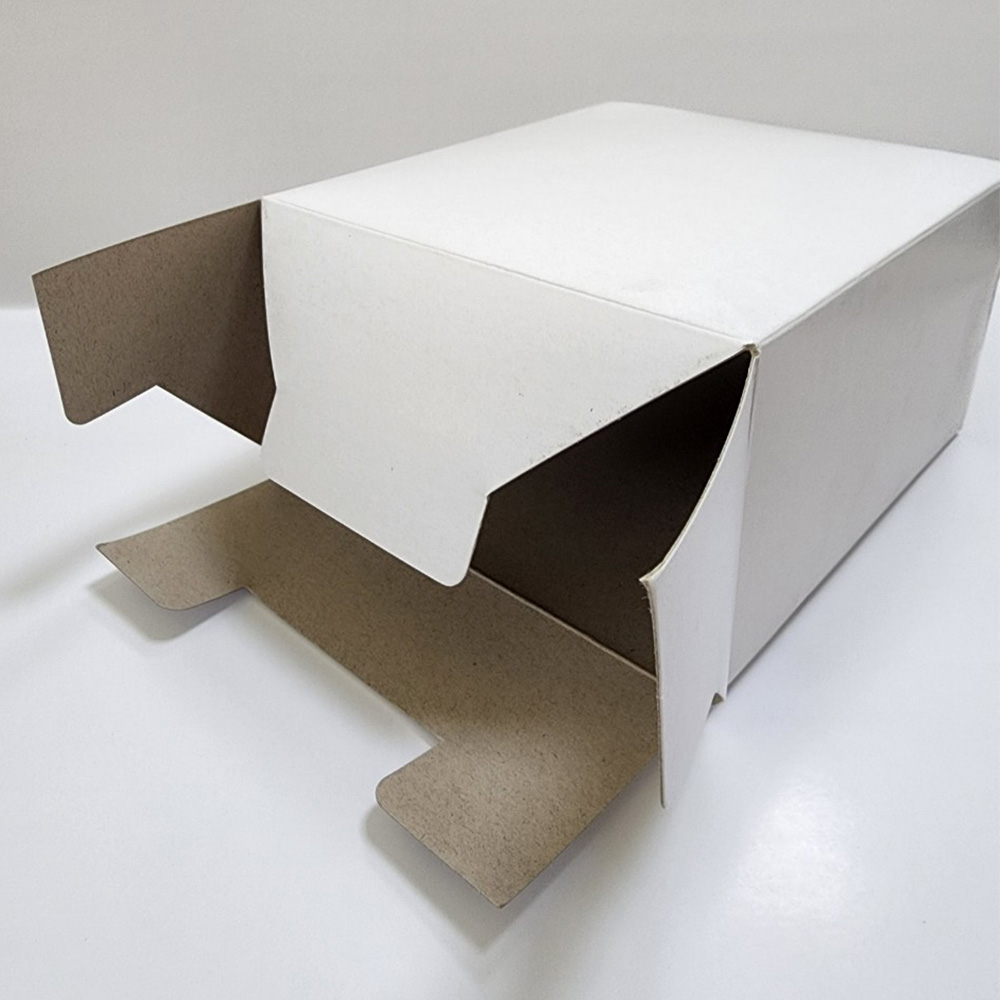
An Auto/Crash Lock Box is a folding carton whose bottom is pre-glued during converting. At packing, the base pops into a locked, load-bearing shape with a single squeeze, enabling very fast setup and higher carrying strength—ideal for speed lines and heavier SKUs in retail and e-commerce.
Structures & Variants
Standard crash-lock bottom: interlocking bottom panels pre-glued to form a strong base when erected.
Crash-lock + tuck top (RTE/STE): common combo—auto-lock base with a straight or reverse tuck lid.
Crash-lock + specialty closures: flip/locking lids, tear-strips, hanger tabs, dust flaps as needed.
Key Advantages
Speed: one-press erection, no taping—cuts packing time and training.
Strength: bottom distributes load evenly—great for heavier or fragile items (pair with inserts for best protection).
Ships flat: low storage and freight volume; easy inventory handling.
Materials (typical)
FBB / SBS cartonboard: 300–450 gsm for premium print and stiffness.
Kraft & specialty papers: for natural/eco aesthetics.
Finishes: matte/gloss/anti-scuff lamination, AQ/UV varnish, foil, spot UV, emboss/deboss, textures.
Select GSM/caliper and grain direction (MD/CD) by product size/weight; add inner supports if needed.
Printing & Converting
Printing: CMYK + spot colors; inside/outside print possible.
Die-cut/crease/gluing: tighter tolerances vs. simple tuck boxes; confirm glue patterns and QC with the converter.
Windows & films: PET windows optional; for recyclability, consider plastic-free window designs.
Design & Sampling Tips
Dimensions: specify L × W × H (internal); H = depth from opening to base.
Load planning: for >0.8–1.5 kg, increase board weight and optimize crash-lock geometry; add inserts/rails if required.
Packing workflow: account for fill opening, line rate, and operator ergonomics; add chamfers/assist scores where helpful.
Automation: if using a cartoner, match glue flap width, tuck style, and pick points to machine specs.
Closures: friction/slit locks, labels, or tear-strips for e-commerce re-seal.
Typical Applications
Beauty/Personal care & Home care: bottles, tubes, kits needing fast setup.
Food & beverage: tea/coffee, small bottles/sticks (ensure compliant materials).
Pharma/Nutraceuticals: droppers, sprays, blister packs (subject to regulations).
Electronics/Accessories: power banks, cables, small devices requiring a sturdier base.
Comparisons
Crash-lock vs. Tuck-end: crash-lock is stronger & faster to pack; tuck-end is more economical on material.
Crash-lock vs. Mailer (corrugated): crash-lock excels at retail presentation; mailers win on shipping compression.
Crash-lock vs. Rigid/drawer: crash-lock offers speed and lower cost; rigid/drawer provide luxury feel and maximum rigidity.
Sourcing & Lead Times (typical)
MOQ: best economics from 500 pcs+ (lower runs possible at higher unit cost).
Sampling: white mockup for structure fit, then digital/press proofs for color/finishes.
Lead time: dieline + samples 3–7 days; production 7–15 days (complex finishes/holidays extend).
Quote essentials: internal size, board spec, print colors, finishes, quantity, ship-to location, and any food-grade/sustainability requirements.