
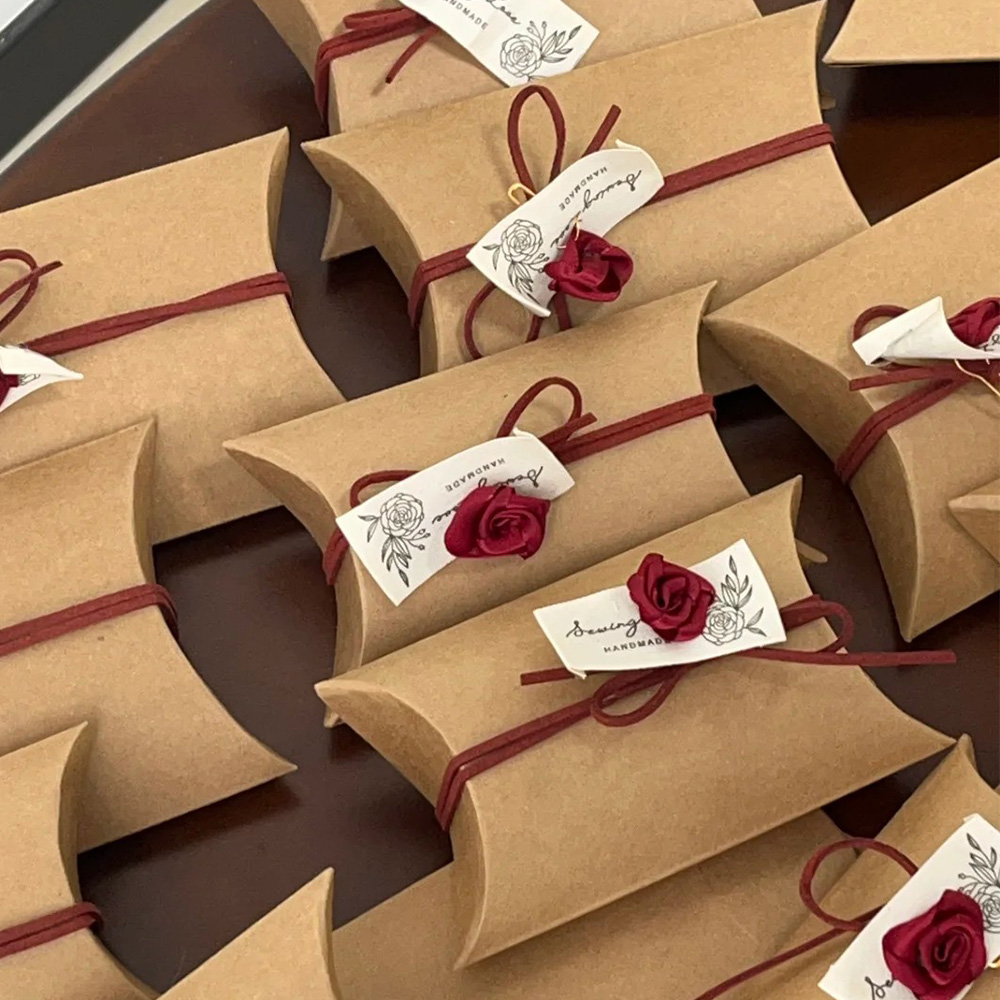
A Pillow Box is a lightweight and elegantly curved packaging structure named for its pillow-like shape. Made from paperboard or specialty paper through die-cutting, the box features curved folding flaps on both ends that lock in place without adhesive. Pillow boxes are cost-effective, easy to assemble, visually appealing, and widely used for gifts, small retail items, and lightweight consumer goods.
1. Structural Features of Pillow Boxes
1. Curved, Elegant Shape
Although the sheet is flat before assembly, the curved score lines create a soft, pillow-like 3D effect when folded.
2. End Flap Locking Design
Both ends feature semi-circular closure flaps that secure the box without glue, offering convenience and stability.
3. Wide Range of Materials
Common materials include:
white paperboard
kraft paper
specialty papers
laminated art paper
eco-friendly paper options
These materials support various branding styles.
4. Convenient for Mass Production
Because pillow boxes can be shipped flat, they save space and reduce logistics costs, making them ideal for large-scale production.
2. Advantages of Pillow Boxes
1. Cost-Effective
Simple structure and low material usage make pillow boxes an economical packaging choice.
2. Attractive Visual Style
The curved silhouette creates a soft and elegant appearance, adding value to retail and gift packaging.
3. Easy to Assemble
Users can form the box within seconds—no glue or tools required.
4. Highly Customizable
Pillow boxes support a wide range of finishing techniques:
custom colors
hot stamping
spot UV
embossing/debossing
die-cut windows
These options enhance brand recognition and shelf appeal.
3. Common Applications
Pillow boxes are ideal for packaging lightweight items, such as:
jewelry and accessories
small gifts and favors
soaps, candles, fragrances
beauty tools and samples
lingerie, socks, and small apparel items
wedding and holiday gifts
candies and snacks
They are popular in retail, e-commerce, and corporate gifting due to their aesthetic charm and practicality.