
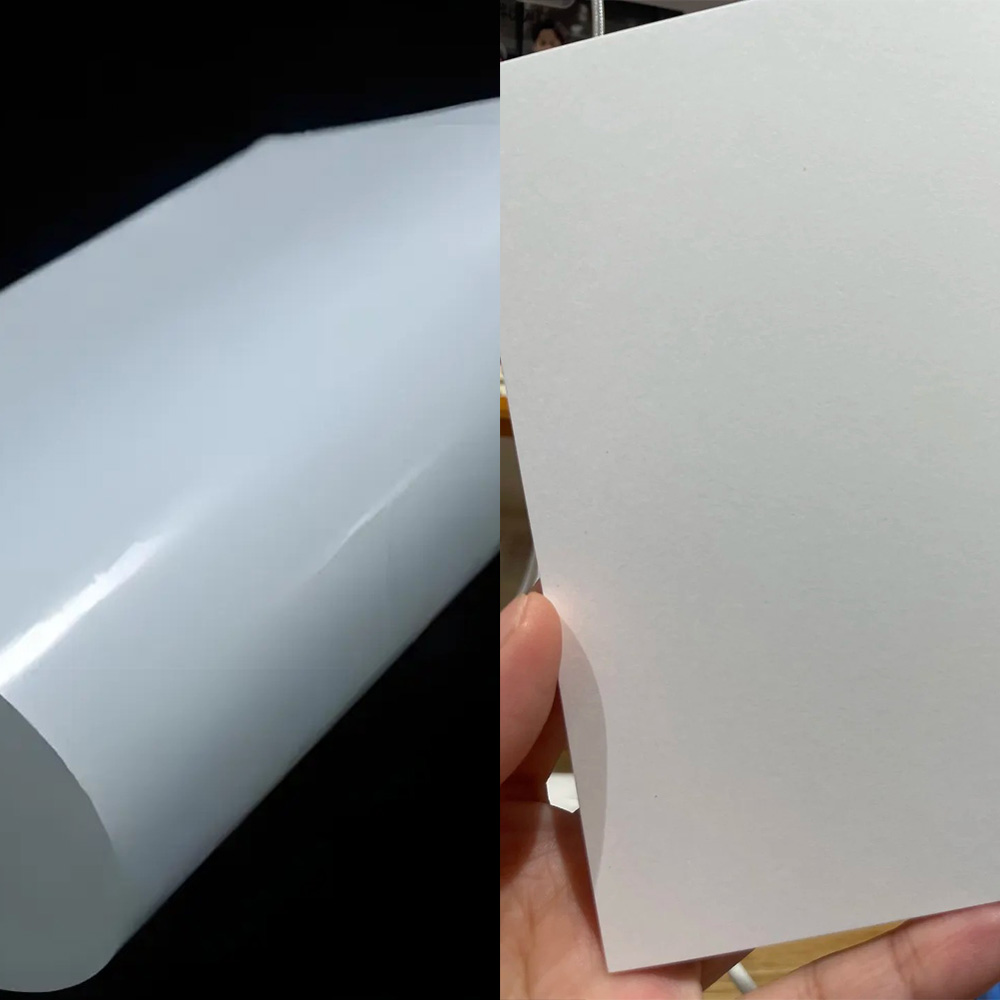
When designing color boxes, the choice of paper material plays a crucial role in appearance, structural strength, and overall cost. White cardboard and coated paper are the two most commonly used materials, yet they serve different purposes in packaging applications.
White Cardboard
White cardboard features high stiffness and thickness, offering excellent structural support and a clean, premium appearance. It can be printed directly and formed into boxes without mounting, making it a popular choice for mid- to high-end packaging.
Best for:
- Color boxes requiring strong structure and protection
- Premium retail packaging (cosmetics, healthcare, electronics)
- Minimalist or high-quality packaging designs
Advantages:
- Strong rigidity and box stability
- Smooth surface with consistent print quality
- No mounting required, simplifying production
Coated Paper
Coated paper is treated with a special coating that delivers outstanding print quality, vibrant colors, and sharp images. However, it has lower stiffness and is usually mounted onto greyboard or corrugated board to provide sufficient strength.
Best for:
- Packaging with high visual and branding requirements
- Cost-sensitive, high-volume production
- Boxes that require mounting for structural support
Advantages:
- Excellent color reproduction and visual impact
- High-resolution printing performance
- Lower material cost per unit
How to Choose?
- Focus on strength and premium feel → White cardboard
- Focus on color and graphics → Coated paper (mounted)
- Small, high-end boxes → White cardboard
- Large or transport boxes → Coated paper + greyboard/corrugated board