
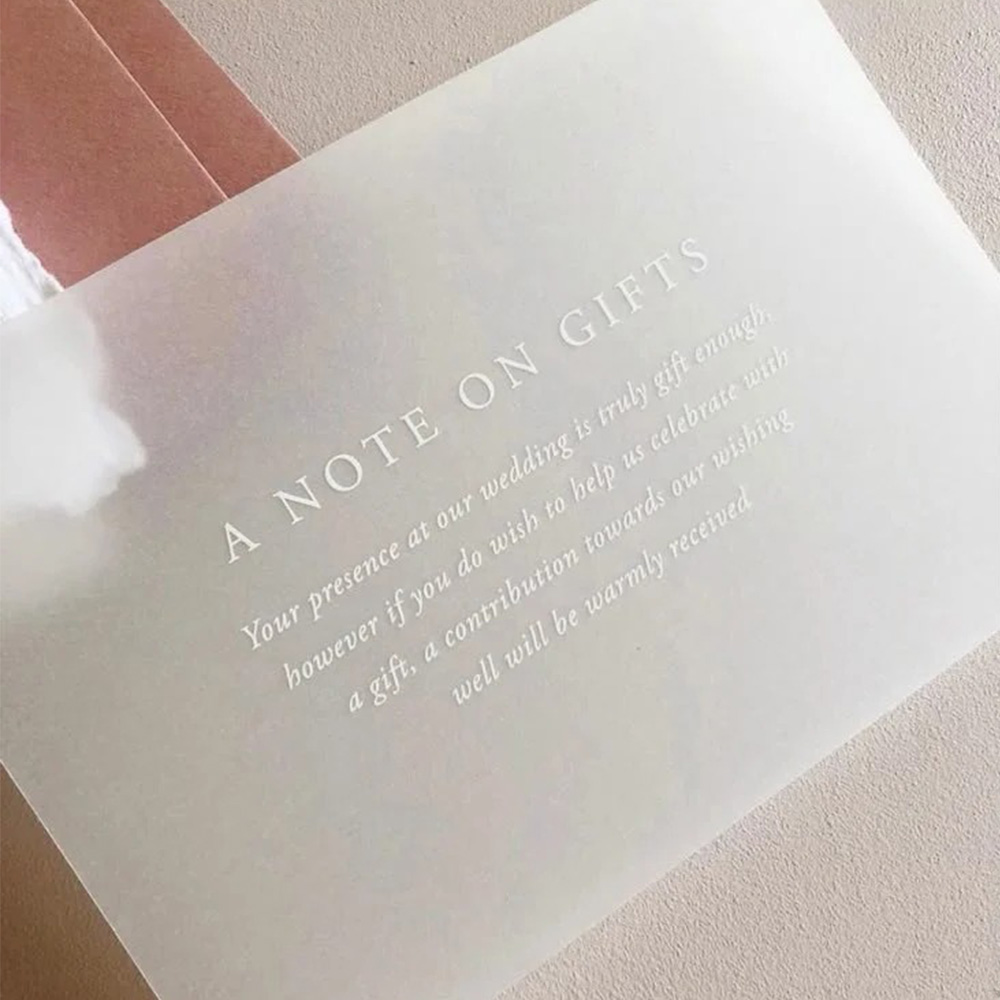
Glassine paper is a high-density, semi-transparent paper produced through supercalendering. Known for its smooth texture, natural grease resistance, moisture protection, and acid-free properties, glassine is widely used in food packaging, crafts, archival storage, and industrial applications. Its unique glass-like sheen and translucency make it both functional and visually appealing.
How Is Glassine Paper Made?
1. Refined Pulping
Wood pulp is heavily refined to produce finer fibers, creating a uniform and dense paper base.
2. Supercalendering
The paper passes through a stack of high-pressure rollers, compressing the fibers tightly to achieve its smooth, glossy, grease-resistant properties.
3. Drying & Finishing
The completed sheet is dried, stabilized, and rolled into reels or sheets for packaging use.
Key Characteristics of Glassine Paper
1. Semi-Transparent with High Gloss
Offers an elegant translucent effect ideal for presentation packaging.
2. Naturally Grease-Resistant & Moisture-Resistant
No coating required—the paper itself provides protection.
3. High Strength and Tear Resistance
Maintains durability even when folded or creased.
4. Acid-Free and Archival Safe
Suitable for long-term preservation of stamps, photos, and artwork.
5. Low Dust and Clean Surface
Ideal for jewelry, crafts, and clean-storage applications.
Common Uses of Glassine Paper
Packaging
Food: bread, pastries, cookies, candies, oily foods
Premium goods: jewelry, candles, leather products, handmade crafts
Creative packaging: stationery sleeves, gift wrap, translucent envelopes
Archival & Protection
Stamp and photo storage
Interleaving for artwork and documents
Industrial Applications
Release liners
Base paper for laminates
Backing paper for stickers and labels
Is Glassine Paper Eco-Friendly?
Yes. Glassine paper is:
Recyclable
Biodegradable
Compostable
Free of plastic coatings
It’s an excellent sustainable packaging option compared to conventional plastic-based translucent materials.
FAQ
1. Is glassine paper waterproof?
It is water-resistant but not fully waterproof. Prolonged soaking will cause absorption.
2. Is it food-safe?
Yes. Glassine is acid-free, non-toxic, and safe for direct food contact.
3. Can glassine paper be printed on?
Yes, although certain printing methods such as flexo, screen printing, or specialized inks yield better results.
4. How is it different from wax paper?
Glassine is grease-resistant due to compressed fibers.
Wax paper is grease-resistant due to a wax coating.
Their properties and appearance differ accordingly.