
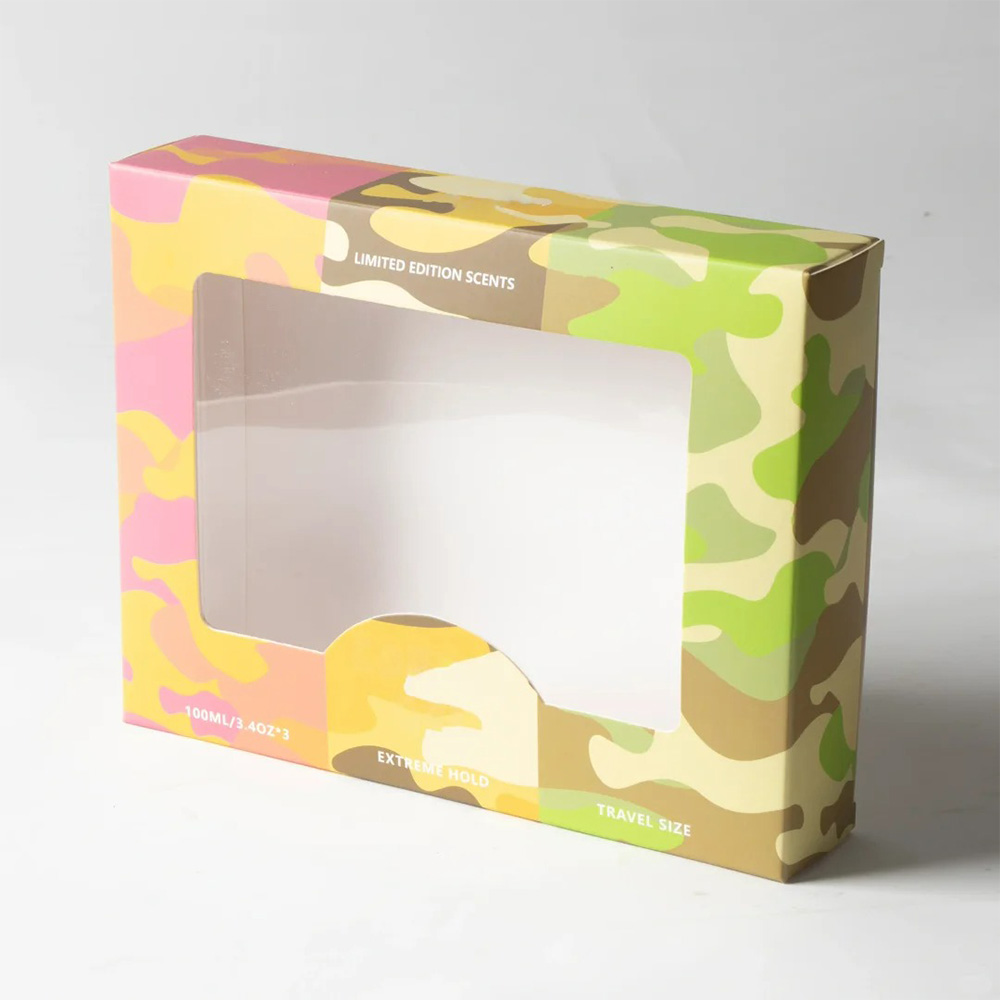
A Window Box is a paper or rigid box with a cutout window covered by a clear film (or left open) so shoppers can see the product without unsealing. It’s popular for beauty & personal care, toys & stationery, food & snacks, 3C accessories, home goods, and gifts—boosting shelf appeal and conversion.
Common Structures
Tuck-end window carton: fast to run for lightweight SKUs.
Auto-lock bottom with window: stronger base for e-commerce + retail.
Drawer/sleeve with window: larger reveal for gift sets and bundles.
Rigid box with window: premium look; small accent windows.
Microflute window carton (E/F): better compression for ship-in-display.
Cutout only (no film): maximum recyclability; use inner bag/tray for dust protection.
Window Materials (quick picks)
PET / rPET (recommended): high clarity, good fold resistance, ~0.2–0.4 mm; rPET adds recycled content.
PP: tough with a soft-matte look; good for low-temp use.
PVC: clear but less eco-friendly (often avoided).
Paper-based/compostable films: greener message—confirm clarity and crease strength.
No film: pure cutout for hardy, bagged, or tray-supported products.
Apply via cold-glue window patching or pre-cut inserts. Large/irregular windows may need extra stiffeners to prevent warp.
Design Tips That Sell
Aim at the “golden zone”: place logos, textures, and key product cues inside the visible area; leave a clean border.
Window shape = brand language: rounded, arcs, or geometric forms; pair with foil/UV/emboss for contrast.
Balance size vs. strength: bigger windows wow but weaken panels—add ribs/frames/step inserts.
Anti-scuff / anti-fog: glossy films benefit from protective coatings or a peel-off film for transit; matte PP reduces glare.
User flow: add finger notches/ribbons for easy access and replenishment.
Best-Fit Applications & Notes
Beauty/personal care: small accent windows to spotlight bottles or pumps; matte wraps + glossy window pop.
Toys/collectibles: large or multi windows showing figure + accessories; reinforce edges and fix products firmly.
Food/snacks: for direct contact, choose food-contact compliant films—or use inner bag + windowed carton.
3C & home: use step trays/thermoforms to “push” the hero part to the window.
E-commerce: prefer microflute + smaller windows or added ribs; run drop/stack tests.
Printing & Finishes
Lamination: matte/gloss/soft-touch to elevate feel.
Foil/spot UV/emboss-deboss: outline the window to guide attention.
Reverse printing (inside): for large sleeves to reduce rub-off.
Window scratch control: validate line speed, glue, and delivery to avoid haze or scuffing.
Cost & Lead-Time Drivers
Box size and geometry, window area/shape, film type & thickness (rPET/functional films cost more), finish stack (soft-touch, foil, UV, emboss), and handwork (multi-window, complex inserts).